

Colleges Respond to AI-Related Academic Misconduct with New Assessment Models, Raising Due Process Questions
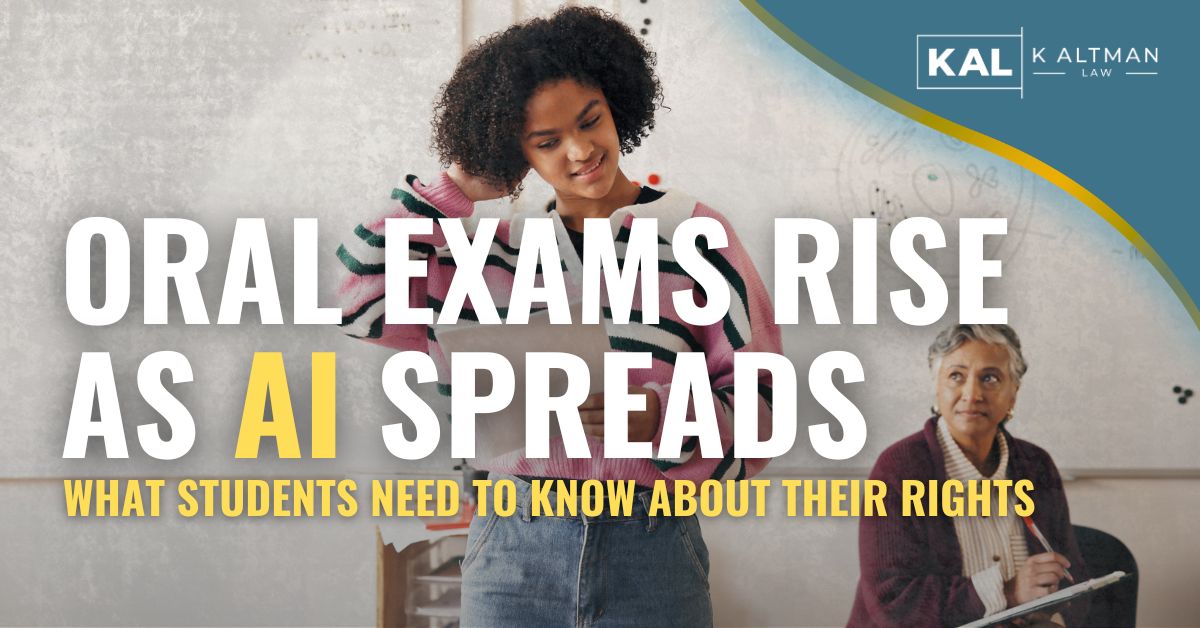
As colleges shift to oral exams and in-person testing in response to AI, questions about fairness, clarity, and student rights are taking center stage.

Keith Altman Founder of K Altman Law
Colleges shift to oral exams amid AI concerns, raising due process and policy clarity issues for students.
According to the Associated Press, some faculty members and universities are increasingly using oral defenses, presentations, in-person exams, and hybrid assessment methods in response to concerns that traditional written submissions may no longer reliably show a student’s actual understanding. The article describes examples from Cornell University, the University of Pennsylvania, and New York University, where educators are experimenting with formats intended to reduce misuse of AI tools and better evaluate student learning.
K Altman Law believes the rise of AI-related academic integrity concerns makes policy clarity more important, not less. Institutions may revise assessment methods and misconduct procedures as technology evolves, but students should still receive fair notice of the rules, a meaningful opportunity to respond, and a process that is applied consistently. Where expectations are unclear, or where policies change faster than students can reasonably understand them, the risk of unfair outcomes increases.
A school’s decision to update testing methods does not eliminate the need for careful process. Students accused of AI-related misconduct may face serious academic and professional consequences, especially in higher education and selective programs. Schools should therefore distinguish between prohibited conduct, permitted tool use, unauthorized collaboration, and mere suspicion based on writing style or performance differences. Clear definitions, documented faculty guidance, and consistent enforcement remain essential.
Students and families should review course syllabi, honor-code provisions, and any newly issued AI-use policies before a problem arises. It is also wise to preserve assignment instructions, grading rubrics, faculty emails, drafts, notes, and other materials that may help explain how work was completed. If a concern is raised, early attention to records, timelines, and the institution’s published procedures can make a significant difference in how a matter is addressed.
“As schools adapt to AI, the answer cannot be uncertainty,” said Keith Altman, Founder and Managing Partner of K Altman Law. “Students should understand the rules they are expected to follow, and institutions should make sure any academic misconduct process is documented, fair, and grounded in clearly communicated standards.”
As institutions continue revisiting academic-integrity frameworks, the conversation is likely to expand beyond whether AI was used and toward how schools define misconduct, evaluate learning, and protect fairness in the disciplinary process.
K Altman Law is a national boutique law firm focused on Student Defense, Special Education advocacy, Title IX, NIL, Civil Rights matters, and related litigation and advisory services. The firm serves clients nationally. http://www.kaltmanlaw.com/
This content is provided for general informational purposes only and is not legal advice.
Every matter is fact-specific; outcomes vary; and laws and procedures differ by jurisdiction.
Viewing or contacting the firm does not create an attorney-client relationship.
Keith Altman
K Altman Law
+1 888-984-1341
kalonline@kaltmanlaw.com
Visit us on social media:
LinkedIn
Instagram
Facebook
YouTube
TikTok
X
Legal Disclaimer:
EIN Presswire provides this news content "as is" without warranty of any kind. We do not accept any responsibility or liability for the accuracy, content, images, videos, licenses, completeness, legality, or reliability of the information contained in this article. If you have any complaints or copyright issues related to this article, kindly contact the author above.
